

Anni Grid Plaited Tee - Quartz by The Endery
Couldn't load pickup availability
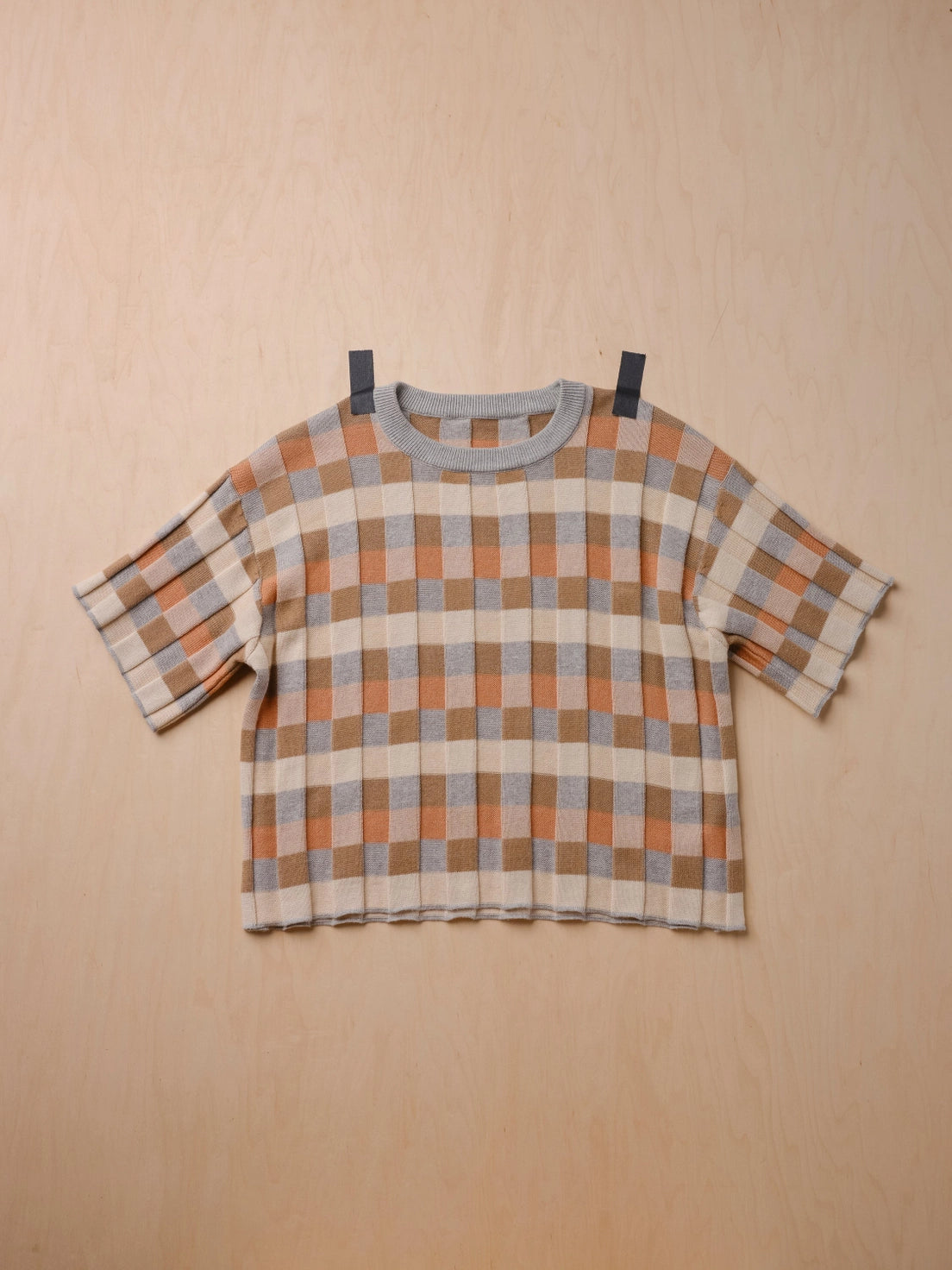
The Anni Tee has a structured fit, but feels light on the body, with a fluid drape created through its ribbed grid structure. It moves with ease, offering a more breathable, flexible wear while still maintaining a sense of graphic structure.
Designed as a lighter evolution of the Bauhaus, it simplifies construction into a single-layer knit while preserving depth through subtle color interplay. Easy to wear on its own and pairs naturally with both structured and voluminous silhouettes, creating a polished everyday look.
- 100% cotton
- Relaxed, boxy fit with a fluid drape
- Ribbed grid knit adds movement, flexibility, and softness
- Midweight cotton that feels light and soft
- Ideal for breezy summer days or in-between seasons
- Pairs well with barrel jeans, high-waisted skirts, or shorts
Ama: is 5'8" 34"bust, 27" waist, 37" hip and is wearing an XS/S
By The Endery
Deadstock Impact:
The Endery's collections are made with at least 60% deadstock waste and ethically hand crafted by Peruvian artisans.
Artisan Impact:
They employ fair-wage peruvian artisans to produce this garment.
They ensure that their artisans are paid fairly for their work, allowing them to support their families and thrive in their communities. Many of their knitters are mothers, and they recognize the importance of providing them with opportunities to work from home while caring for their children.
Environmental Impact:
When textiles go unused, it wastes the resources used to make them. By bringing unwanted yarn into circulation, we create value with everything the Earth has given us.
Not only does using deadstock help to salvage large amounts of water but also saves tons of energy. a win win for the environment!
Behind the name:
Anni Albers
the anni is named after one of our most influential textile artists: anni albers.
albers helped redefine weaving as an art form — turning textiles into bold, abstract compositions shaped by bauhaus principles and pre-Columbian art. she explored abstraction, structure, and materiality, creating "pliable planes" and "hybrids between text and textile", establishing textiles as autonomous artworks through her solo MoMA exhibition and influential book, On Weaving.
her work is a reminder that fabric can be more than functional. it can be visual language.
Share